Wondering whether a resale condo or a new-development condo makes more sense in DUMBO? You are not alone. In a neighborhood shaped by historic warehouse conversions and newer full-service towers, the right choice often comes down to how you want to live, what you want to pay each month, and how you think about long-term value. This guide will help you compare both paths with a practical DUMBO lens. Let’s dive in.
Why DUMBO Offers Two Condo Experiences
DUMBO is not a one-style condo market. Its housing stock reflects both its industrial past and its more recent growth, which means you will find older loft-style conversions alongside newer ground-up buildings.
That mix is rooted in the neighborhood’s history. The DUMBO Historic District includes about 91 historically significant buildings, many of which have been converted to residential or office use. The city’s 2009 rezoning also encouraged both residential conversion and new mixed-use construction, helping create the side-by-side condo options buyers see today.
The market is also active enough that this choice matters. Current inventory sources show both resale condos and a large number of new-development buildings in DUMBO, and pricing remains firmly in premium territory. DUMBO BID reports a 2024 median sale price of $1,667,000 and a median price per square foot of $1,500, while StreetEasy currently shows a median sale price of $1.8 million.
What Resale Condos Often Feel Like
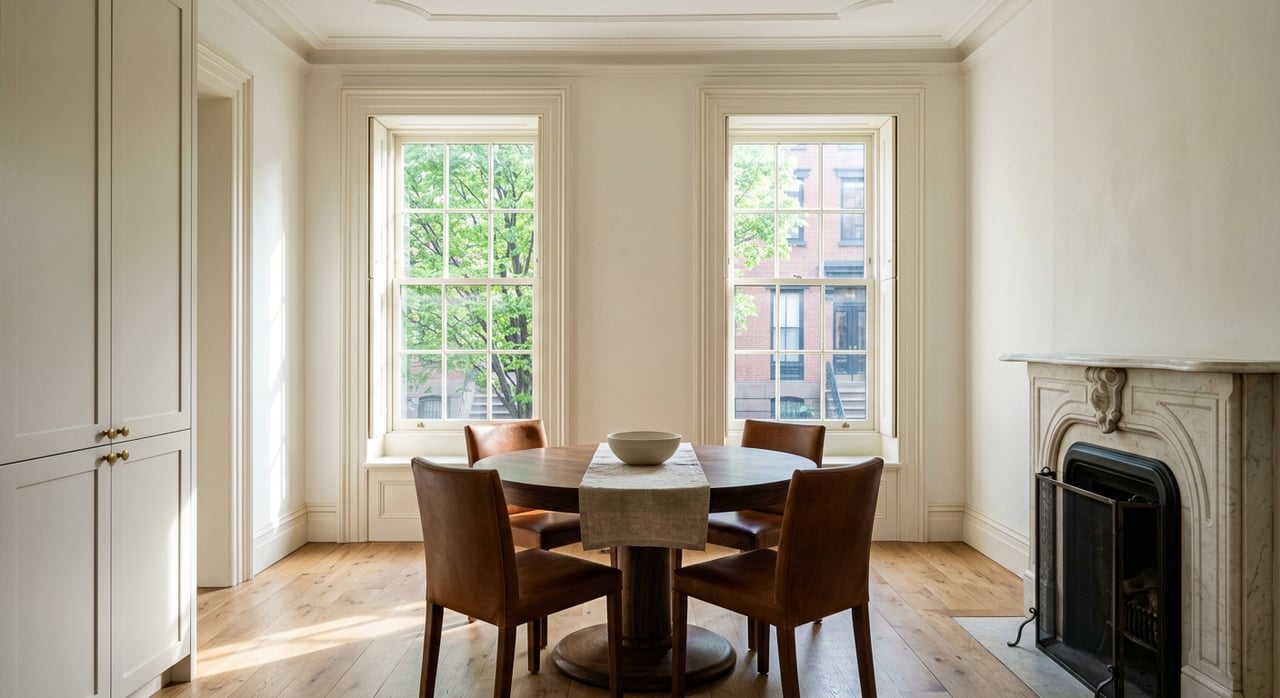
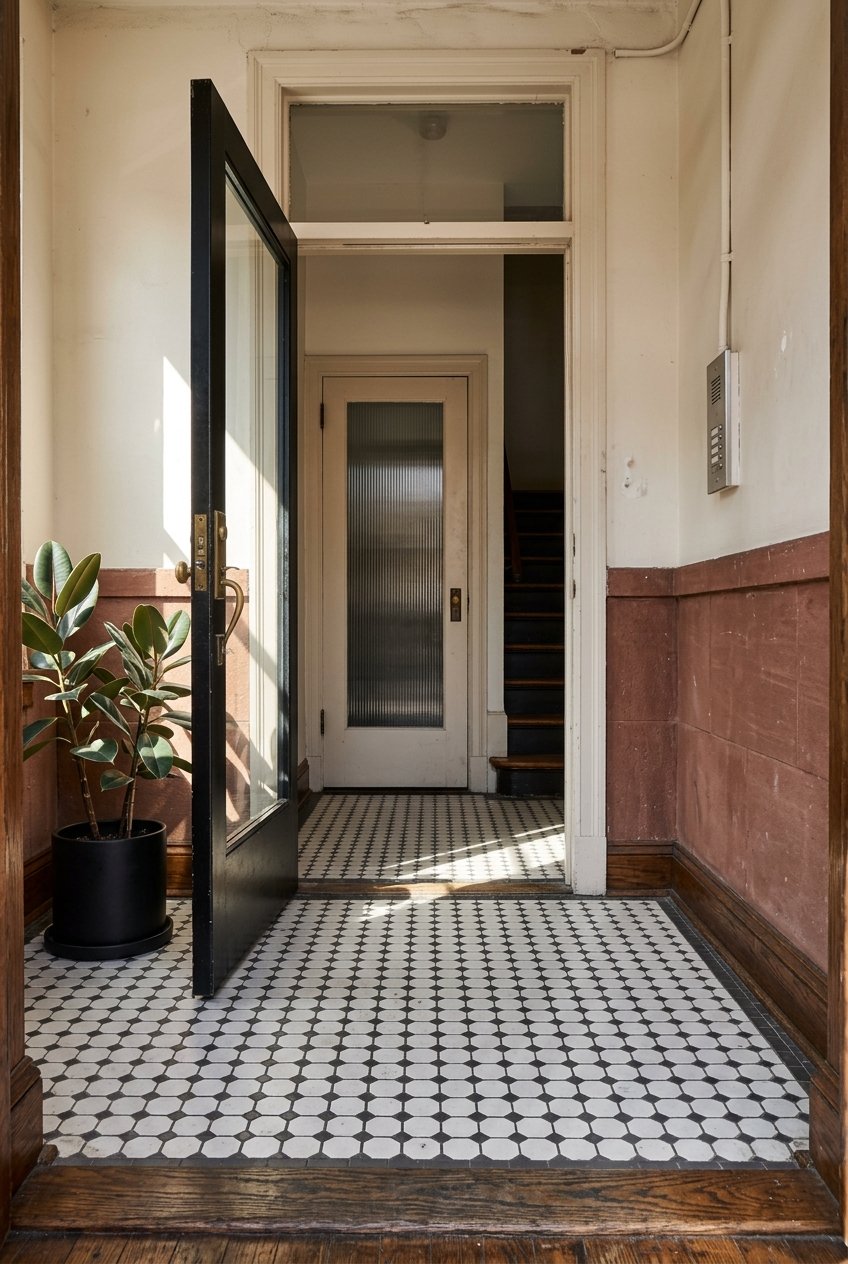
In DUMBO, resale condos are often former industrial or loft buildings from the early 1900s that were later converted for residential use. That usually translates to homes with more character, more architectural variation, and a stronger sense of the neighborhood’s original fabric.
Buildings like 70 Washington Street, The Clock Tower, and the Sweeney Building reflect that pattern. Listing materials for 70 Washington describe features such as vaulted ceilings, oversized windows, loft details, and more open, less standardized layouts. If you want a home that feels distinct rather than uniform, resale may appeal to you.
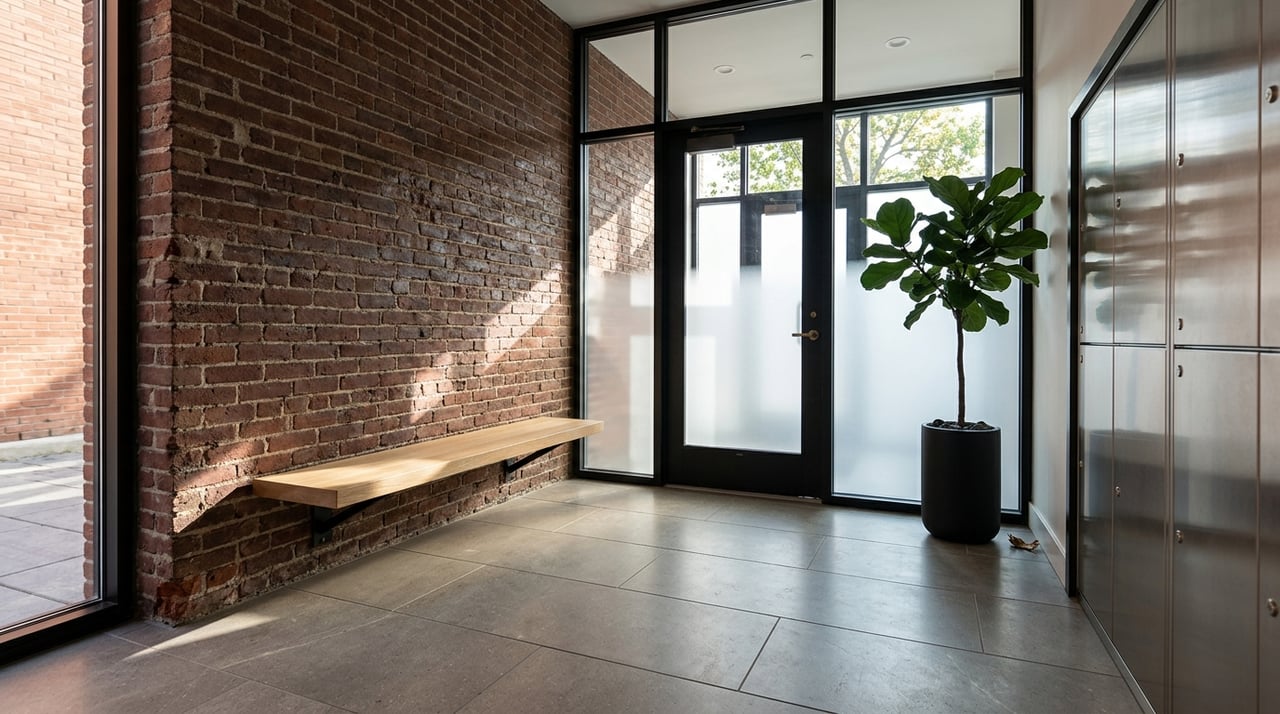
That said, resale does not always mean giving up service. Some converted buildings still offer strong amenity packages, including doorman coverage, concierge service, a gym, elevator access, package rooms, and roof decks. The bigger difference is that resale buildings tend to vary more from one address to another.
What New-Development Condos Often Feel Like
New-development condos in DUMBO usually offer a more turnkey experience. These buildings are often larger, more vertically designed, and more centered on convenience, staffing, and resident amenities.
Current examples include Olympia DUMBO, 98 Front, and Front & York. These buildings represent the newer side of the neighborhood, with larger unit counts and a more managed daily experience. If you value predictability, polished finishes, and a building that functions almost like a private club, new development may be a better fit.
Amenity packages also tend to be more extensive. At 98 Front, published amenities include a landscaped rooftop, indoor saltwater pool and spa, steam room, fitness room, lounge, coworking space, playroom, 24-hour doorman, resident manager, bike storage, parking, storage, and smart-access features. Olympia advertises more than 38,000 square feet of indoor and outdoor amenities, while Front & York describes its amenity collection and residential garage as the largest in DUMBO.
Character vs Convenience
For many buyers, this is the real decision point. Resale condos often deliver volume, texture, and layouts that feel less cookie-cutter. New development often delivers ease, consistency, and a more fully serviced lifestyle.
Neither option is automatically better. If your priority is exposed history, loft scale, and a home with more visual personality, resale may be the better match. If your priority is modern systems, a polished common area experience, and robust amenities under one roof, new development may make more sense.
Compare Monthly Costs Carefully
It is easy to focus on purchase price and overlook what ownership will cost month to month. In DUMBO, that can be a mistake.
Amenity-heavy new developments often carry higher common charges because the building is supporting pools, roof decks, staffing, parking, lounges, and other services. Older conversions can also have meaningful monthly costs, especially if they offer doorman service and upgraded common spaces, but their amenity load is often narrower.
The key is to compare real building budgets, not assumptions. Two similarly priced condos can feel very different financially once you account for common charges, taxes, and what you actually use in the building.
Do Not Assume Tax Benefits Apply
Some buyers hear about condo tax abatements and assume the savings come automatically. In New York City, that is not how it works.
According to NYC311, the co-op and condo abatement is only available for primary residences, and building management, boards, or managing agents must apply on behalf of eligible units. The Department of Finance also notes that the benefit amount depends on the unit’s average assessed value, and units above $60,001 receive a 17.5% abatement.
That means you should verify the current status for any unit you are considering. If a building loses or opts out of an abatement, the math can change, and that can affect your true monthly carrying cost.
Closing Costs Can Shift the Comparison
Closing costs are another reason resale and new development may not pencil out the same way, even when sticker prices look similar. In New York City, the Real Property Transfer Tax on residential condominium units is 1% at $500,000 or less and 1.425% above that.
If you are financing the purchase, mortgage recording tax also matters. For individual residential condominium mortgages of $500,000 or more in New York City counties, the combined mortgage recording tax is 2.175%.
Those costs can materially affect your cash needed at closing. When you compare options, it is worth looking at the full acquisition picture rather than only the asking price.
Resale Value Is More Nuanced Than “New Wins”
Many buyers assume the newest building will always hold value best. In practice, resale strength depends on more than age.
Recent reporting for the Brooklyn Heights, Cobble Hill, DUMBO, and Downtown Brooklyn submarket shows higher median prices for new development than resale condos across every bedroom category shown. That suggests newer product can command a premium, but it does not mean every new unit will outperform every resale loft.
In DUMBO, unique floor plans, architectural presence, light, views, and building quality can all matter. A standout resale condo in a well-regarded conversion may compete very well with newer inventory, especially if it offers something harder to replicate.
Why Building Amenities Matter in DUMBO
DUMBO has a strong demand base for a compact waterfront neighborhood. DUMBO BID reports 85 acres of Brooklyn Bridge Park, more than 613,000 average weekly park visitors, 7.36 million annual subway trips across York Street, High Street, and Clark Street, and 650,765 annual ferry trips. It also reports 10,200 residents, more than 1,000 creative and tech companies, and more than 125 retail storefronts.
At the same time, neighborhood reporting notes that DUMBO is lighter on some everyday amenities, including full-service grocery options. That helps explain why in-building features can carry extra weight here. If your building offers fitness space, parking, storage, coworking, or outdoor space, that convenience may influence your day-to-day experience more than it would in some other neighborhoods.
A Simple Way To Decide
If you are choosing between resale and new development in DUMBO, start with how you want to live rather than with marketing language. Then test that preference against the numbers.
Choose resale if you are drawn to:
- Loft character
- Oversized windows and volume
- Less standardized layouts
- A more distinctive architectural feel
- Potentially narrower amenity costs
Choose new development if you are drawn to:
- Turnkey finishes
- Larger amenity packages
- Concierge-style services
- Parking or smart-building features
- A more self-contained lifestyle
Then compare each option on the details that actually affect ownership:
- Common charges
- Real estate taxes
- Abatement status
- Closing costs
- Floor-plan efficiency
- Building services you will truly use
The Best Choice Is Usually Building-Specific
In DUMBO, broad labels only take you so far. A well-run resale building with excellent proportions and solid services may be a stronger fit than a flashy new tower. A new-development condo with smart layout, strong amenities, and manageable carrying costs may be the easier long-term choice for another buyer.
What matters most is making an apples-to-apples comparison across specific buildings and specific units. When you do that carefully, the right answer usually becomes much clearer.
If you are weighing condo options in DUMBO and want a measured, building-by-building perspective, the MINSKY | ABRISHAMI Team can help you compare product, carrying costs, and lifestyle fit with the kind of local context that makes a difference.
FAQs
What is the main difference between resale and new-development condos in DUMBO?
- Resale condos in DUMBO often offer loft character, unique layouts, and converted industrial architecture, while new-development condos usually offer turnkey finishes, larger amenity packages, and a more service-driven lifestyle.
Are new-development condos in DUMBO always more expensive than resale condos?
- Not always, but grouped market data for the broader submarket shows new development commanding higher median prices than resale condos across the bedroom categories reported.
Do resale condos in DUMBO still offer amenities?
- Yes. Some resale condo buildings in DUMBO offer amenities such as doorman service, concierge, gyms, roof decks, elevators, and package rooms, though the amenity mix varies by building.
How important are common charges when buying a DUMBO condo?
- Very important. Amenity-heavy buildings often have higher common charges, so you should compare monthly costs building by building rather than assume one category is always cheaper.
Does every DUMBO condo qualify for a tax abatement?
- No. In New York City, the co-op and condo abatement is only available for eligible primary residences, and the building’s management or board must apply on behalf of qualifying units.
Why do in-building amenities matter so much in DUMBO?
- DUMBO has strong transit and waterfront access, but it is also known for being lighter on some everyday amenities, which can make features like fitness space, storage, parking, and coworking more valuable in daily life.