Since it opened on May 20, people have been lining up outside 112 Bond Street a half hour before the doors, angling for one of the walk-in-only seats at the bar. By five o'clock the room fills: a boisterous front section, curved banquettes in the middle, and a quieter back nook with its own bar for reservation holders only. This is Lonnies, and by the accounts of people who have eaten there, that opening-week crush hasn't let up much since.
A few blocks over, and a world away from that kind of foot traffic, the building that anchored Boerum Hill's art scene for sixteen years sits empty of its old gallery hours. The Invisible Dog Art Center closed its original home at 51 Bergen Street for good on March 31, 2025. It didn't fold. It went nomadic, running shows out of borrowed rooms across the city and, in a few cases, across an ocean. But if you walk past 51 Bergen expecting to duck into a Thursday show the way you might have in 2019, there's nothing there to duck into.
Those two facts, a new restaurant that can't seat everyone who shows up and an old arts institution that no longer has an address, are not really separate stories. They're the same story, told from opposite ends of the neighborhood's attention span. Boerum Hill's center of gravity has moved, and it's worth knowing where, whether you're deciding where to eat this week or just trying to figure out why Bergen Street feels different than it did a couple of years ago.
What's Actually Filling the Room on Bond Street
Lonnies is the second restaurant from Sean Rembold and Caron Callahan, the married couple behind Ingas Bar in Brooklyn Heights, which picked up recognition from the Michelin Guide in 2025. Rembold spent years in Andrew Tarlow's Williamsburg kitchens, at Diner, Marlow & Sons, and Reynard, and has been a two-time James Beard nominee for Best Chef: New York State. None of that guarantees a line, but it explains why one formed.
The menu leans toward things Rembold has cooked for years and wanted to cook again: chicken under a brick, a daily prime rib special kept deliberately unfussy, a dry-aged double patty burger for $26, and a Basque cheesecake Callahan calls the dessert she's most excited about. The kitchen runs entirely on induction, no gas at all, which Rembold has said lets him revisit techniques from his early cooking days. The room took over the former Café Kitsuné space, which closed toward the end of summer 2025, and Callahan designed it with vintage Czech light fixtures that glow closer to a streetlamp yellow than the cooler LED light most new restaurants default to.
Naming it took longer than building it. Rembold has said he and Callahan are the type of perfectionists who needed the maternity ward to insist on names for their own kids before they'd commit.
"We didn't want a b.s. name," Rembold said of the process.
They landed on Lonnie Lanham, a Vietnam veteran turned hairdresser who shaped Rembold's early years in Kentucky and represented, in Rembold's words, a kind of complete freedom he wanted the restaurant to carry.
A second concept, a standalone bar, is reportedly still coming from the same team, though as of this writing it remains unbuilt and unnamed. If Lonnies is any indication, that one won't need much of a warm-up period either.
The Gallery That Left the Building
The Invisible Dog's departure from Bergen Street wasn't sudden, even if it felt that way to people who hadn't been paying attention. Founder Lucien Zayan has written that his landlord gave him a year's notice on the same day in April 2024 that a minor earthquake shook the city, telling him the economics of the space could no longer be justified. Zayan took the year and turned it into a send-off: an artist party, nightly dinners, and a final flea market on the ground floor that echoed the one he'd held when he first found the space in 2009, packed with belt buckles and industrial leftovers from the building's decades as a factory.
"51 Bergen street began as a flea market in 2009," Zayan wrote, "and now, 16 years later, we're ending where we started."
What's left on Bergen Street now is smaller and quieter: La Salle A Manger, a food project Zayan still runs out of the neighborhood, offering tailored dinners and cooking classes by request. The gallery itself has gone, in the organization's own description, for a walk, staging collaborations at venues that include Atelier Jolie and Hashimoto Contemporary in New York, and reaching as far as Collection Lambert in Avignon and BUoY Arts Center in Tokyo.
For a resident, the practical upshot is simple: the drop-in gallery hours that used to structure a Thursday or Saturday walk down Bergen Street don't exist anymore. If you want to catch whatever The Invisible Dog is doing next, it means checking wherever they've landed that month rather than assuming the building is open.
What Hasn't Moved
None of this means Boerum Hill's dining scene was quiet before Lonnies showed up. Smith Street has carried Saul, Char No. 4, and Clover Club for years, alongside French Louie a few blocks south, and none of those rooms are going anywhere. That steadiness matters here. It's the baseline against which a line at 4:30 on a Friday actually registers as unusual, rather than just another good restaurant doing good business.
The contrast is really about pace, not quality. The established Smith Street spots earned their following gradually, over seasons and years. Lonnies built its crowd in weeks, on the strength of a proven kitchen team and a neighborhood that was clearly ready for it.
The Grocery Store That Isn't Open Yet
If you've heard that a Whole Foods is coming to the neighborhood, that part is true, and the part people tend to skip is that it isn't close. Whole Foods signed a lease in June 2026 for roughly 35,000 square feet at 182 Smith Street, on the corner of Warren Street right at the line between Cobble Hill and Boerum Hill. The space had been sitting empty since Rite Aid closed it as part of the chain's broader bankruptcy-driven pullback. As of this writing, there's no announced construction timeline and no opening date.
That distinction is worth holding onto if you're planning your errands around it. A signed lease on a big-box space is a real commitment, but it isn't a moving date, and build-outs at that scale in existing retail corridors routinely take a year or more once permitting and construction actually start.
What This Means If You Live Here
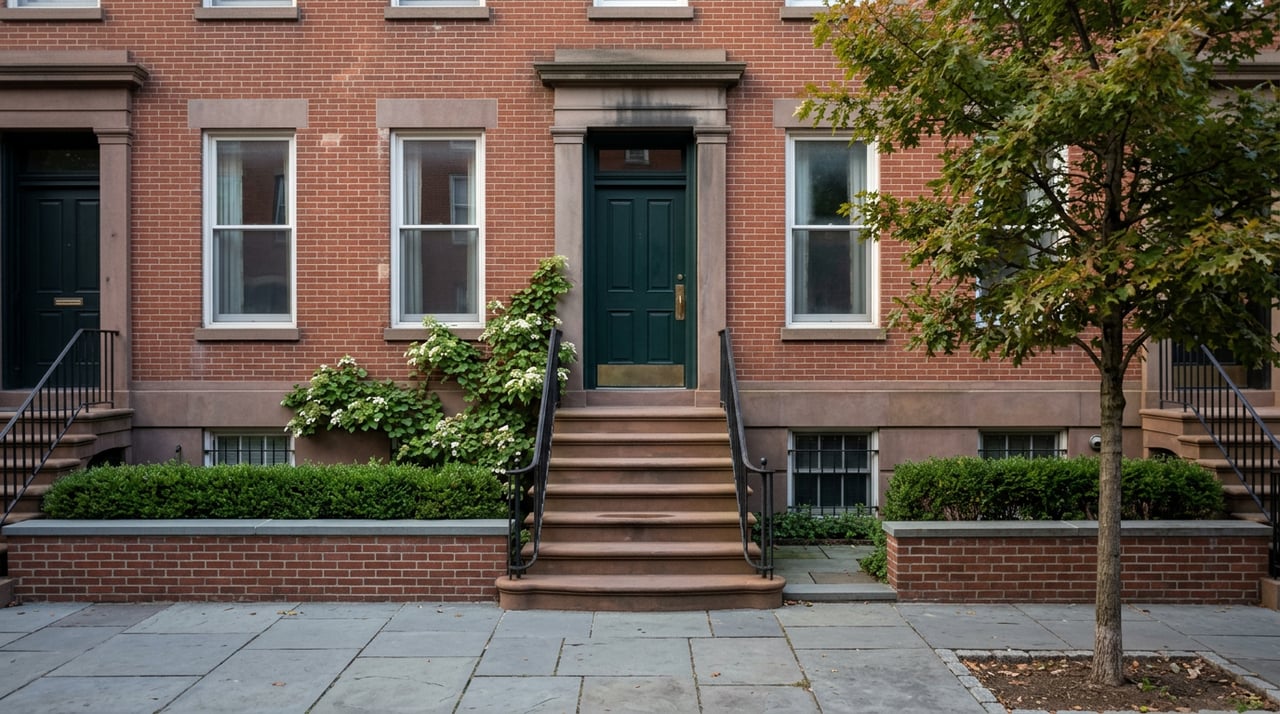
None of these threads points to Boerum Hill becoming a different neighborhood. The brownstones on Dean and Wyckoff aren't changing, and the Boerum Hill Association is still putting on the same block parties and house tours it always has. What's shifting is where the neighborhood's energy shows up on a given week. Right now it shows up in a line outside a Bond Street burger counter, not in a gallery that spent sixteen years teaching people to expect art on Bergen Street without checking first. Both are part of the same place. Knowing which one to expect on a given night is the difference between a good evening and a wasted trip.
If you're weighing what a Boerum Hill address is worth to your daily life right now, whether that's the walk to Bond Street or the quieter blocks further in, the MINSKY | ABRISHAMI Team can walk you through what's actually changing on the ground here and what it means for a home search in this part of Brooklyn.